Wedding Invitations Are Becoming a Guest Experience
A wedding invitation used to have one primary job: announce the date, time and venue. In 2027, that role is expanding. Couples are treating invitations as the first touchpoint of the celebration—something that introduces the wedding mood, tells their story and makes it easier for guests to know what to do next.
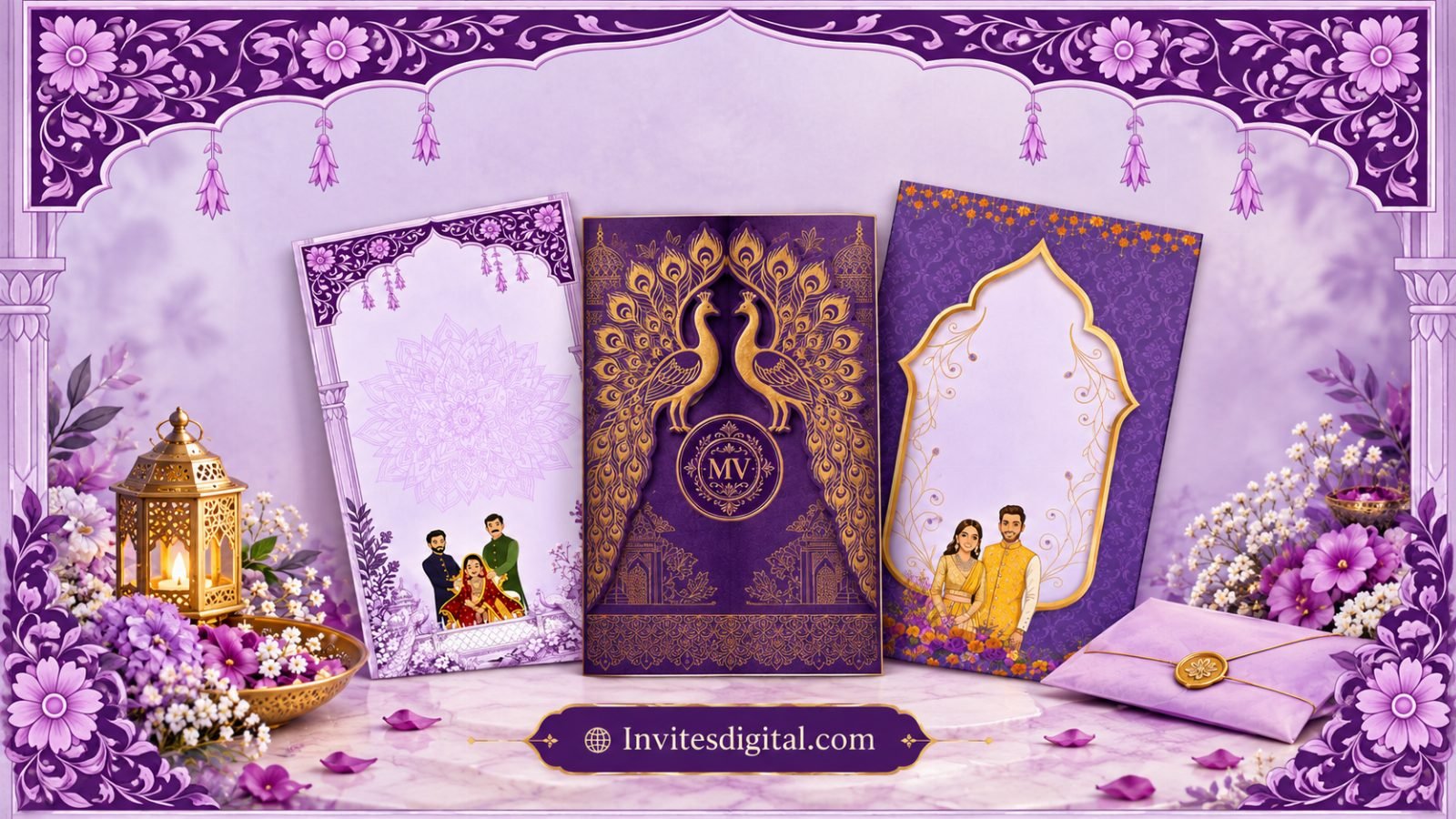
That does not mean printed cards are disappearing overnight. India has a strong invitation culture, especially for grandparents, relatives and close family. Instead, the biggest change is that the invitation is becoming more flexible. A beautifully designed digital invite can carry the emotions of a traditional card while adding motion, music, maps, event details, RSVP forms and updates.
Looking at invitation and stationery direction heading into 2027, the strongest theme is not “paper versus digital.” It is experience versus information overload. Traditional elements are being retained, but the way guests receive and interact with them is changing.
Wedding Invitation Trends 2027: What Is Replacing the Traditional Card?
The most interesting 2027 invitation trends are likely to combine Indian wedding culture with convenient digital experiences. Here are the shifts couples should watch when planning their own invitation.
1. Video invitations are becoming the emotional first impression
Static designs are making room for short cinematic invitation videos, especially for weddings shared through WhatsApp. Instead of asking guests to read several blocks of text, couples can introduce themselves, reveal the wedding date, show illustrated or real-life moments, and finish with the invitation details.
For Indian weddings, video works particularly well because it can bring in music, regional language, festive animation and family traditions. A Marathi wedding might use traditional visual motifs and devotional elements, while a South Indian wedding could highlight temple-inspired styling, classical music and regional colours.
The best video invitations are not overloaded with effects. A clear storyline, readable information and a strong opening usually make the experience feel more premium than simply adding more animation.

2. Interactive wedding invites are moving beyond a single screen
The next step after a digital card is an invitation that behaves more like a small wedding website. Guests may be able to open event sections, view the complete function schedule, check the venue on a map, save important details and respond to the invitation.
This is especially useful for Indian weddings with multiple functions such as haldi, mehendi, sangeet, wedding and reception. Rather than fitting every detail into one crowded design, the invitation can present each function clearly and keep the guest journey simple.
For couples, interactivity also means important information can be easier to manage. A venue change, timing correction or updated function detail can be communicated through the digital experience without asking everyone to keep track of a new printed card.
3. QR codes are becoming a bridge between paper and digital
QR codes offer a practical middle ground for families that still want printed invitations. A physical card can remain elegant and traditional while the QR code opens a digital page containing the extended details.
That page can include the full schedule, location, RSVP, accommodation information, dress guidance, contact details or other guest instructions. The printed invitation becomes the beautiful keepsake; the digital layer becomes the useful information hub.
This hybrid approach is particularly relevant in India because different generations often prefer different ways of receiving wedding information. Couples do not have to choose one format for every guest.
4. Personalisation is becoming deeper than names and colours
Personalised invitations are moving beyond simply changing the couple's names. Couples are increasingly looking for designs that feel connected to their story, hometown, culture, proposal, favourite places or wedding theme.
That could mean a hand-drawn version of a family home, a custom illustration inspired by the venue, meaningful symbols, a timeline of the relationship or regional motifs used in a modern way. The goal is to make the invitation feel recognisably “theirs” rather than like a generic template.
This direction also mirrors the wider 2027 stationery conversation, where handwritten-feeling typography, hand-drawn illustrations and highly personal details are gaining attention alongside more traditional luxury elements.
5. Minimal luxury is replacing crowded invitation designs
Indian weddings can involve a lot of information, but that does not mean every detail needs to appear on the first screen. Modern invitation design is leaning toward cleaner compositions, fewer competing decorations and stronger visual hierarchy.
Think rich maroon, ivory, deep green, muted gold, champagne or jewel-inspired palettes paired with refined typography and one or two memorable motifs. Traditional aesthetics still have a place; they simply get more breathing room.
For digital invitations, minimalism has another advantage: guests can understand the essential message quickly on a phone. A premium look comes from thoughtful spacing, typography, imagery, motion and consistency—not from filling every available area.

6. Wedding websites and RSVP pages are becoming part of the invite
A wedding invitation no longer has to end after the guest reads “You are invited.” For larger celebrations, a connected wedding page can act as the practical companion to the invitation.
Couples can use it to share a welcome note, event timings, venue information, maps, RSVP details, accommodation guidance and other important updates. This becomes especially valuable when guests are travelling from another city or when several functions happen at different venues.
Instead of sending separate messages for every question, the invitation can give guests one place to check the latest information. That makes the invitation feel less like a one-time announcement and more like a useful part of the wedding journey.
7. Eco-conscious choices are influencing both digital and printed formats
Sustainability is also shaping invitation decisions. Some couples are reducing the number of printed inserts, choosing simpler stationery, or using digital invitations for a larger guest list while reserving physical cards for close family.
The most realistic approach is often not to reject paper completely, but to print intentionally. One thoughtfully designed card plus a digital information layer can communicate the same celebration without creating a large stack of separate inserts.
Will Printed Wedding Invitations Disappear in India?
Probably not—and that is an important part of the 2027 picture. Printed invitations still carry cultural and emotional value. Many families enjoy handing a card to relatives, keeping one as a memory, or following traditions around formally inviting loved ones.
What is changing is the role of the printed card. Instead of carrying every piece of information, it can focus on the visual and emotional statement of the wedding. Digital tools then handle details that are easier to access online.
This hybrid model is already a practical direction in 2026 discussions around Indian invitations: couples are increasingly blending the familiarity of print with the convenience of digital sharing and RSVP.
How Indian Couples Can Choose the Right Invitation Format
There is no single format that works for every wedding. The right choice depends on your guest list, family expectations, number of functions and the kind of experience you want to create.
- Choose digital-first when most guests are comfortable with WhatsApp, mobile links and online RSVPs.
- Choose hybrid when elders and close relatives value printed invitations but the wider guest list needs quick digital access.
- Keep a traditional printed format when the physical invitation itself is an important cultural or family tradition.
Most importantly, design the invitation around the guest experience. Check that names and dates are easy to read, every function has a clear place, the venue information is understandable, and the invitation still looks beautiful on a mobile screen.
The Future of Wedding Invitations Is More Personal, Not Simply More Digital
The biggest lesson from Wedding Invitation Trends 2027 is that technology is not replacing tradition as much as it is giving couples new ways to express it. A digital invitation can still feel deeply Indian, emotional and ceremonial. A printed card can still be luxurious while connecting guests to a modern digital experience.
Expect the strongest invitations of 2027 to combine three things: a distinctive visual identity, useful interactive information and a personal story. Whether that arrives as a cinematic video, a QR-connected card, an interactive invitation page or a carefully designed hybrid set, the winning idea is the same—make the invitation feel like the beginning of the wedding, not just an announcement.
For couples planning their celebration, that means you have more freedom than ever to create an invitation that reflects your relationship, respects family traditions and gives guests a smoother way to be part of the big day.